Signs Your Pulveriser Parts Need Replacement
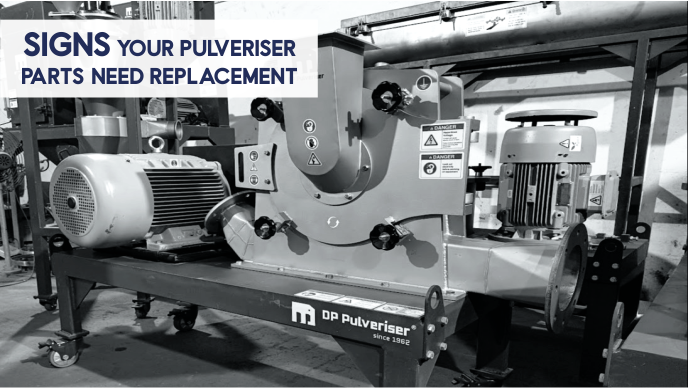
In high-speed size reduction systems like pulverisers, wear is inevitable.
But delayed part replacement can lead to poor product quality, higher power consumption, unexpected breakdowns, and costly downtime.
Identifying early warning signs helps maintain performance and extend machine life.
Here are the key indicators to keep an eye on:
1. Drop in Output Capacity If your feed rate is the same but production output has reduced, worn internal parts may be the cause. Possible worn components: Hammers / beaters Grinding liners Rotor elements Why it happens: Worn grinding surfaces lose impact efficiency, reducing size reduction performance.
2. Inconsistent or Coarser Particle Size When product fineness starts varying or you’re unable to achieve target micron levels, internal wear is often the issue. Check for wear in: Classifier wheel Grinding tracks or liners Screens (if applicable) Impact: Reduced control over particle size distribution and product rejection.
3. Unusual Noise or Vibration A healthy pulveriser runs with a consistent sound pattern. Changes often signal mechanical problems. Warning sounds: Metallic knocking Grinding noise High vibration levels Likely causes: Imbalanced rotor Loose or broken hammers Worn bearings This is a critical sign ignoring it can cause major damage.
4. Increased Power Consumption If motor load increases without increased production, internal resistance is rising. Reasons include: Dull grinding elements Excess friction from worn liners Poor airflow due to damaged classifier parts Higher energy use = lower efficiency and higher operating cost.
5. Excess Heat Generation Overheating indicates inefficient grinding or mechanical issues. May be caused by: Worn grinding parts creating friction Bearing deterioration Improper air circulation due to worn classifier blades Heat can also affect heat-sensitive materials.
6. Visible Wear During Inspection Regular shutdown inspections are crucial. Look for: Thinning of hammers/beaters Cracks in liners Rounded edges instead of sharp impact surfaces Erosion on classifier blades If parts have lost original shape, replacement is due.
7. Frequent Machine Jamming or Blockages Internal geometry changes due to wear can disturb airflow and material movement. Symptoms: Material buildup Discharge choking Poor flow inside chamber Often linked to worn liners or classifier components.
8. Increased Maintenance Frequency If the machine needs more frequent adjustments or minor repairs, it may indicate that major wear parts are nearing end of life.
Why Timely Replacement Matters
Replacing worn parts on time helps to:
Maintain consistent particle size Reduce energy consumption Prevent sudden breakdowns Extend overall machine life Ensure product quality.
Pro Tip: Maintain a wear-part logbook and track operating hours. Predictive replacement is always cheaper than emergency repair.